A supplier who answers "two weeks" is telling you the answer without the arithmetic behind it. Lead time is not one number — it is four stages running in sequence, and the slowest stage is the one that decides your date. Here is how the time is actually spent, and which parts of it anyone can move.
They are strictly sequential — fabrication cannot start before the parts are ordered if you want them kitted together, and assembly cannot start before the boards exist.
| Stage | What happens | What makes it longer |
|---|---|---|
| 1. Components | BOM checked, parts ordered from distributors or the manufacturer, received and kitted against your build quantity. | Any part on manufacturer lead time. A single out-of-stock line can set the whole date — this is the stage most often responsible. |
| 2. Fabrication | Gerber reviewed, tooling and drill program generated, panels etched, drilled, plated, finished, electrically tested. | Layer count, surface finish (ENEPIG takes longer than HASL), and whether the design needs any non-standard process. |
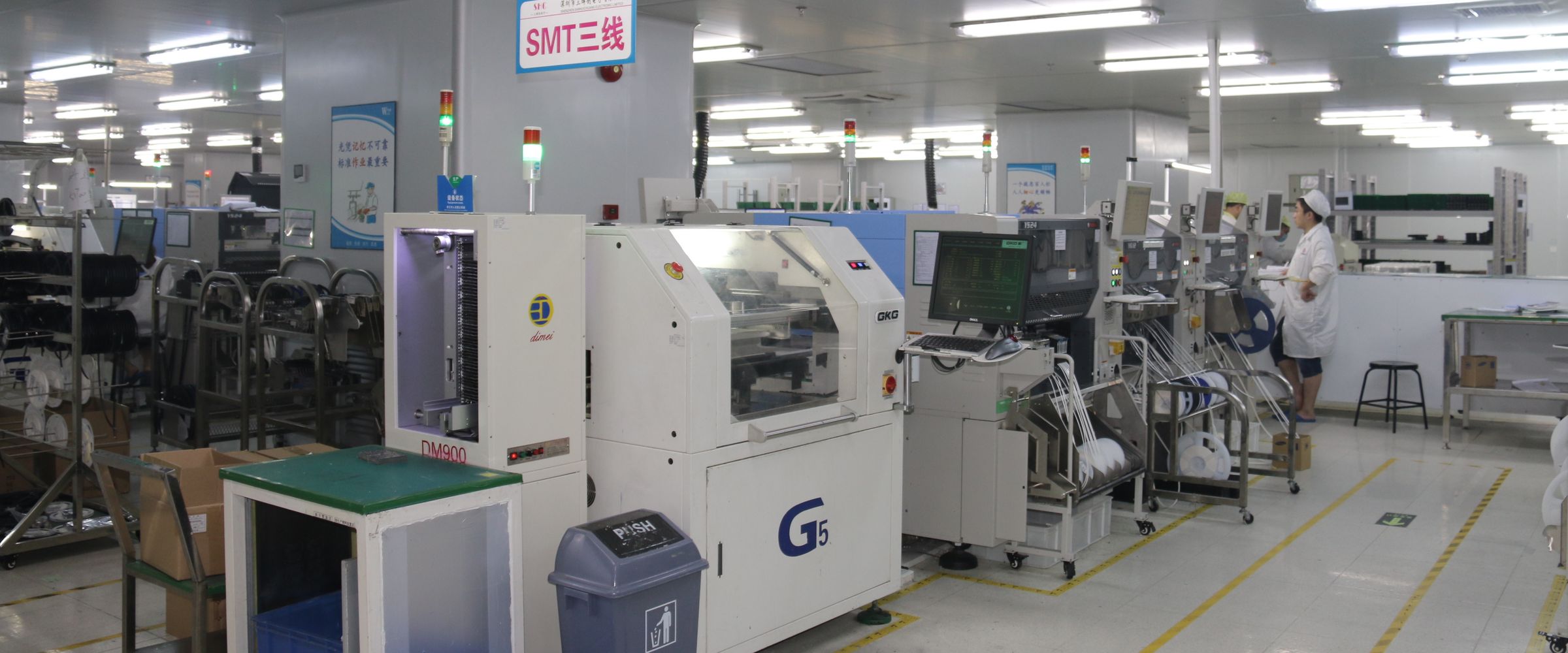
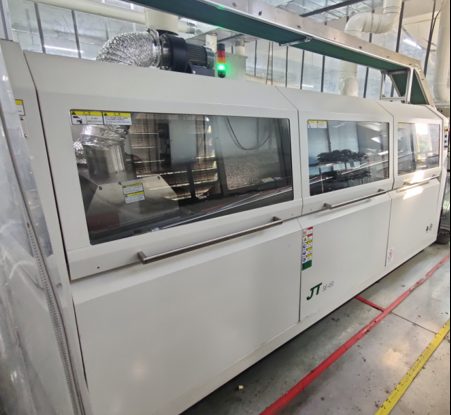
| 3. Assembly | Stencils cut, paste printed, components placed, reflowed, through-hole and hand-soldered parts added. | Number of sides, number of unique parts, fine-pitch and BGA content, and how many boards are in the run. |
| 4. Test & finishing | Inspection, electrical or functional test, conformal coating where specified, packing. | Whether a test fixture must be built, whether programming is needed, and coating or potting, which have their own setup. |
What ships at the end: the boards, the test data, the first-article records and a certificate of conformity — plus component traceability for the parts we sourced.
A bare-board order is stages 1, 3 and 4 removed — no components to procure, nothing to place, nothing to test as an assembly. That is why its clock is much shorter, and why the two numbers are not comparable.
| What you order | Stages that run | Published lead time |
|---|---|---|
| Bare board only | Fabrication | 3–4 days prototype · 8–16 days mass production |
| Turnkey PCBA | Components + fabrication + assembly + test | 7 days up to 5 units · 14 days 6–1,000 · 21 days 1,001–10,000 |
The gap between the two rows is almost entirely component procurement — the stage a bare-board order never pays for. It is also why "we can make the boards in four days" and "the assembly takes three weeks" are both true statements about the same project. Bare-board production lead time depends on board type, layer count, surface finish and quantity, so read 3–16 days as the range our board fabrication runs at rather than a promise for a specific design. The full parameter list is on the capabilities page.
Layer count sets the floor. These are the published numbers our fabrication runs to.
| Layers | Expedited prototype | Standard prototype | Mass production (orders above 30 m²) |
|---|---|---|---|
| 2 | 24 hours | 3–4 days | 8–10 days |
| 4 | 48 hours | 5–6 days | 10–12 days |
| 6 | 72 hours | 6–8 days | 12–14 days |
| 8 | 72 hours | 8–10 days | 14–16 days |
Two things this table makes explicit. The expedited column is capped at 72 hours regardless of layer count — above six layers, expediting buys you days rather than hours. And the mass-production column is tied to order size (above 30 m²); below that, the order is scheduled as a prototype lot.
This is the single most useful question to ask about any quote, and it has a one-line answer.
In practice the answer is almost always a component rather than anything in the factory. Assembly time for a few hundred boards is measured in hours of line time; a part on a 16-week manufacturer lead time is measured in months. When a quote comes back with an unexpectedly long date, the cause is nearly always in stage 1.
Replacing a long-lead part with a pin-compatible alternative in distributor stock — usually the single biggest lever.
Approving the files and freezing the BOM early, so the clock starts sooner.
Keeping the assembly single-sided, which removes an entire setup.
Accepting a standard surface finish instead of a special one.
Ordering the full quantity at once rather than releasing it in scheduled batches.
Paying for a faster line when the bottleneck is a component.
Sending the files "early" while the design is still changing — a moving BOM restarts the clock.
Splitting an order to get "some boards sooner" — the setup cost is paid twice.
Asking for a shorter date without changing the BOM. The date is an output, not a negotiation.
Marking every part as critical. It removes the information a supplier needs to prioritise.
Customers often measure lead time from the first enquiry, which makes every supplier look slower than the date they quoted. The two are different measurements, and only one of them is a commitment. From enquiry to a frozen file package there is an unbounded amount of design work — clarifying part numbers, substituting an out-of-stock line, correcting a footprint, answering a DFM question — and none of it can be scheduled, because it depends on decisions on your side.
So the honest structure is: 2 hours for a first reply from a person who has read your files, 24 hours for a quote with a price, a lead time and anything we think will cause a problem on the line (complex assembly quotes can take up to 48, and we say so when that is the case). After that, the production clock starts on the day you approve the final BOM and Gerber files. See what to send us for a quote for what those files need to contain.
When you approve the final BOM and Gerber files, not when you send the enquiry and not when the quote is issued. Everything before that point — clarifying a part number, replacing an out-of-stock component, correcting a footprint — is design work, and design work that continues during production is how a 14-day order becomes a 25-day one.
Sometimes, and it depends entirely on which stage is setting the date. If the bottleneck is our own line, it can often be moved by paying for a priority slot. If the bottleneck is a component on a 16-week manufacturer lead time, no amount of money in the factory changes the date — the only real lever is substituting the part, which is a design decision on your side.
It usually is, but not by as much as people expect. Fabrication tooling and stencils already exist, so the setup work is behind you. What does not disappear is component procurement and line scheduling — if the parts are in stock and the line is free, a repeat order can be markedly quicker. If either of those is not true, the repeat runs at roughly the same pace as the first.
Yes, and by a wide margin. A bare board skips component procurement, assembly and assembly test entirely, so the published lead time is 3–4 days for a prototype and 8–16 days for mass production, against 7 to 21 days for a turnkey assembly. If your schedule is tight and you are set up to place the parts yourself, buying the bare board and the assembly from different suppliers can be faster — but it moves the component risk and the accountability onto you, which is what turnkey vs. split suppliers works through.
The three files a quote needs, the four that make it accurate, and the DFM report you get back.
The other half of component risk: what to do when the part is not slow, but gone.
What changes between a prototype run and a production run, and when to change supplier.
Send us the Gerber and BOM. We will come back within 24 hours with a price, a lead time, and a note on which part is longest-lead — so you know exactly where the weeks are going.